
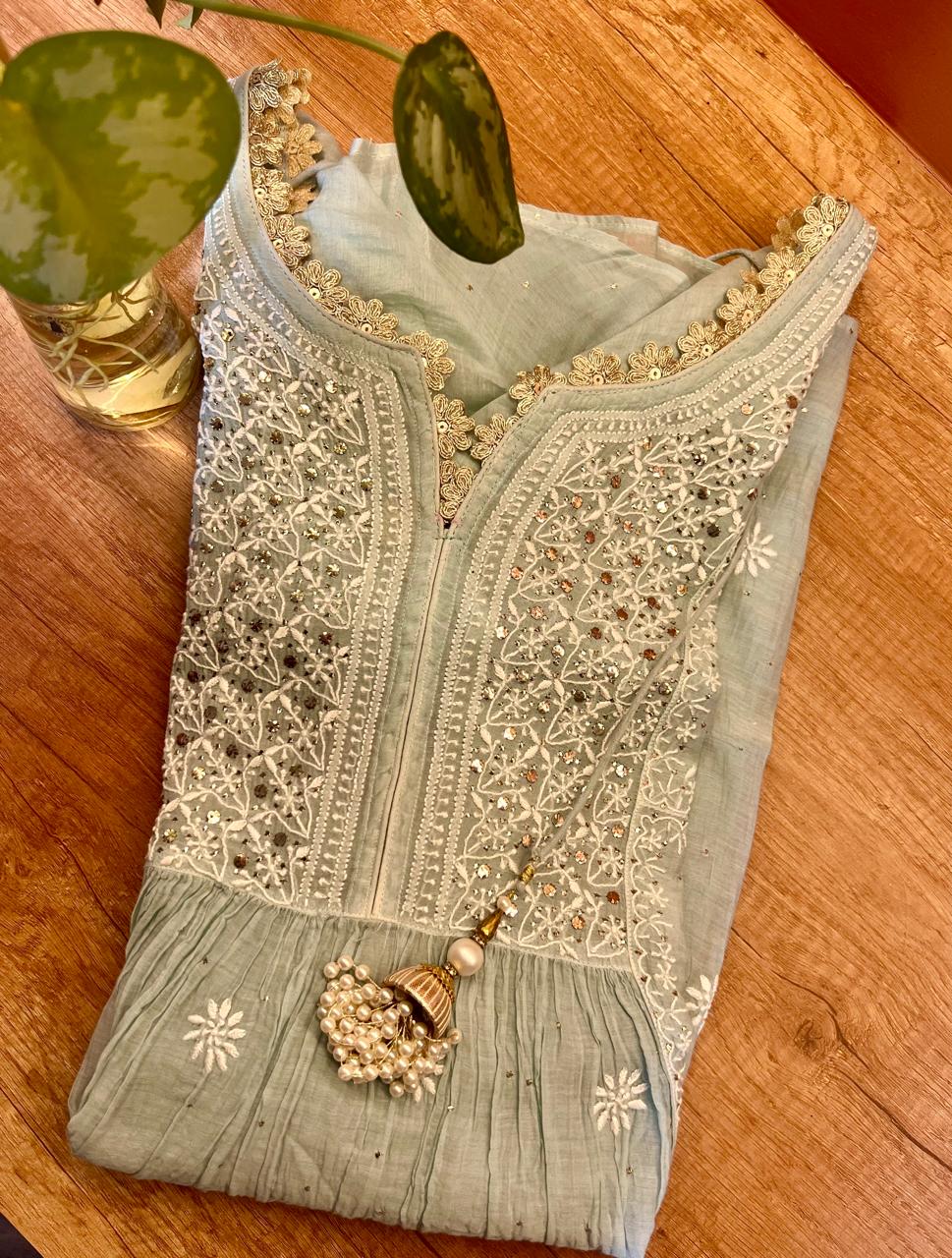
Begin With Washing
The most critical moment in the life of an embroidered textile is its first wash. Always hand wash in cold water with a mild, pH-neutral detergent. Never use biological detergents, bleach or enzyme-based products — these are designed to break down organic matter, which includes the natural fibres in your fabric. Use no more than a capful of detergent, dissolved fully in cold water before the garment is submerged.
Gently agitate the fabric with your hands — never scrub, twist or wring. The embroidery is attached to the surface fibres and aggressive handling can loosen or distort stitches, particularly raised work like phanda or murri. Rinse thoroughly in cold water until the water runs clear.
Drying with Care
To remove excess water, lay the wet garment flat on a clean, dry towel and roll them together gently — the towel absorbs the moisture without stressing the fabric. Never wring, never tumble dry, and never hang a wet embroidered piece, as the weight of the water will stretch and distort it.
Dry in shade. Direct sunlight will fade both the fabric and any tonal variation in the embroidery thread over time. Lay the piece flat on a clean surface or a drying rack, reshaping it gently while damp. For sarees, dry one panel at a time to avoid uneven stretching.
“The way you store a piece matters as much as the way you wash it. Heirlooms are made through years of small, careful decisions.”
Pressing and Storage
Iron embroidered pieces on the reverse side only, using a cool to medium setting with a pressing cloth — a thin piece of muslin placed between the iron and the fabric. Direct iron-to-fabric contact, especially on raised embroidery, can flatten the texture and leave shine marks that are difficult to remove.
For storage, wrap pieces in acid-free tissue paper or clean muslin cloth rather than plastic. Plastic traps moisture and can encourage mildew. Store in a cool, dry place away from direct light. For sarees, refold periodically along different lines to prevent permanent crease marks from forming at the fold points.
For heavily embroidered pieces — those with significant raised work or jali embroidery — dry cleaning at a trusted specialist is the safest option. Always inform the cleaner that the piece is handcrafted and embroidered. A good cleaner will treat it accordingly. A piece worth owning is worth the small effort of caring for it well.