The Floral Vocabulary
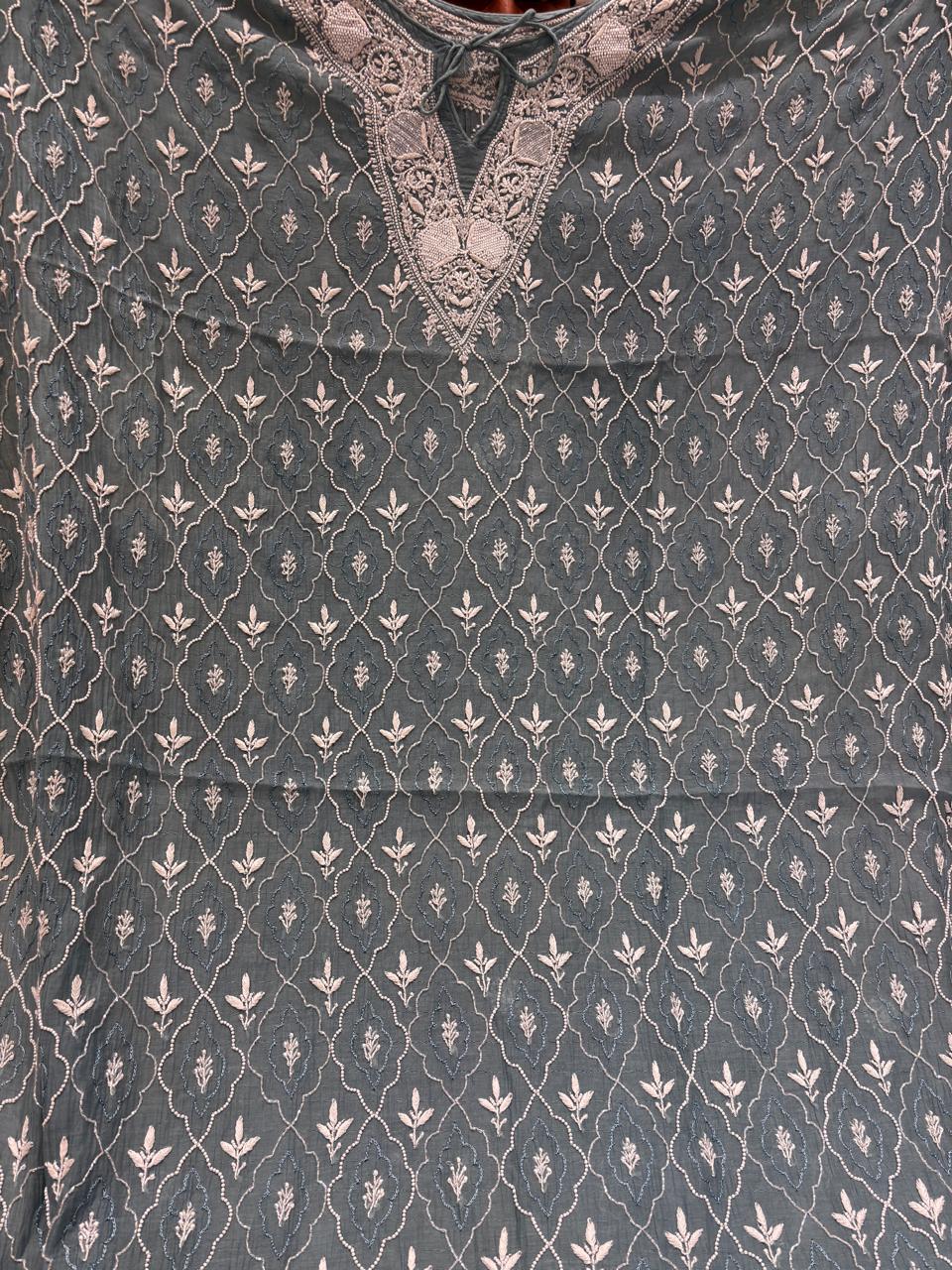
The most prevalent motifs in Chikankari are drawn from the natural world — flowers, leaves, vines and birds. The buti, a small isolated floral motif, is the most common: a single bloom, sometimes no larger than a thumbnail, embroidered in clusters across a fabric. The phool, or full flower, is more elaborate — a complete open blossom with petals rendered in different stitches to suggest depth and dimension.
These floral motifs were not chosen arbitrarily. They carry the aesthetic philosophy of the Mughal and Awadhi courts — a deep reverence for the garden as a symbol of paradise. The Persian concept of paradise itself, firdaus, is etymologically a garden. To embroider flowers was, in a sense, to cultivate paradise on fabric.
The Mango and the Vine
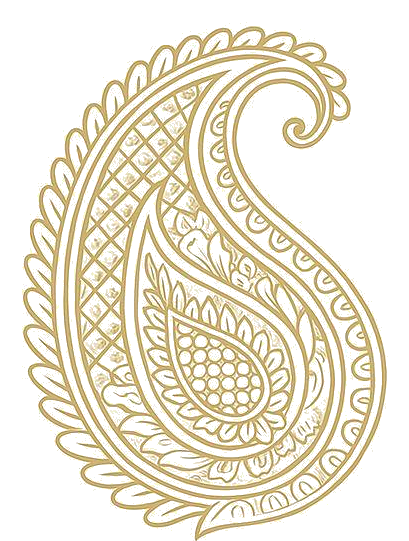
The keri, or mango motif — better known in the West as paisley — is one of the most recognisable in South Asian textile traditions. In Chikankari, it appears in borders, pallus and as standalone design elements. The teardrop shape is believed to represent a mango bud, a symbol of fertility and abundance in the Indian tradition. In Persian symbolism, it represents a bent cypress tree, symbolising resilience and grace.
The bel, a continuous vine motif, is equally significant. Running along borders and hemlines, the bel creates a sense of movement and flow — a visual metaphor for continuity and the unbroken thread of tradition. It is among the oldest recurring motifs in Indian textile design.
“To understand the motifs is to read a story that has been told, thread by thread, for four hundred years.”
Jali: The Art of Negative Space
Among all Chikankari techniques, jali is perhaps the most spectacular. Rather than adding thread to fabric, the artisan manipulates the existing weave — pulling apart threads with a needle to create a delicate, lattice-like transparency. The result resembles fine lace, but is achieved without cutting a single thread. The pattern appears in the gaps, in the negative space between what remains.
Jali is technically demanding and time-consuming. It can take a skilled artisan days to complete a small section. But the result is unlike anything else in embroidery — a textile that seems to breathe, that catches light differently depending on angle, that is never the same twice.
At Naqsh, we look for pieces where the motifs are placed with intention — where the spaces between embroidery are as considered as the embroidery itself. This editorial eye, combined with authentic handwork, is what defines a truly exceptional Chikankari piece.