The Art of Shadow and Light
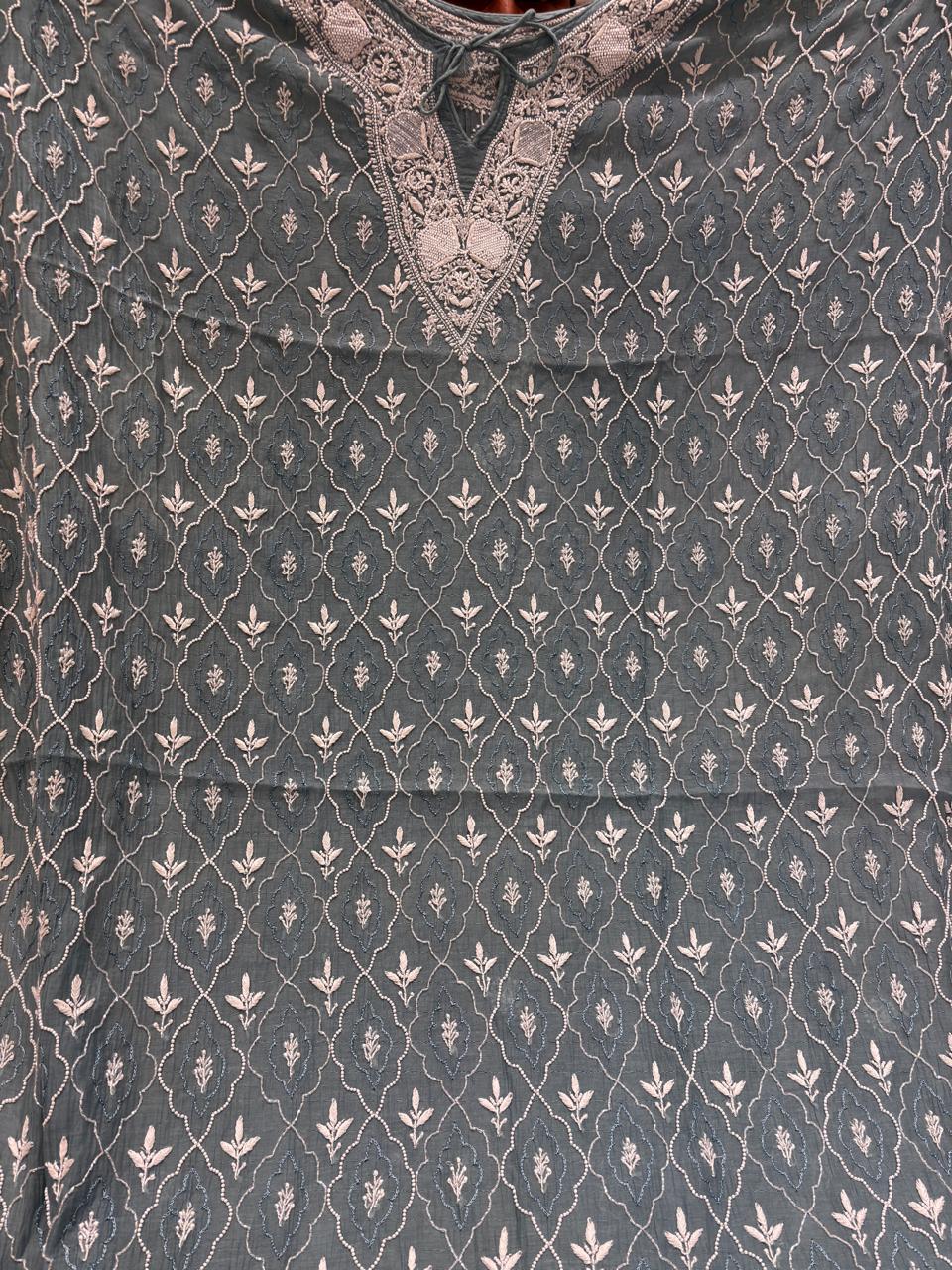
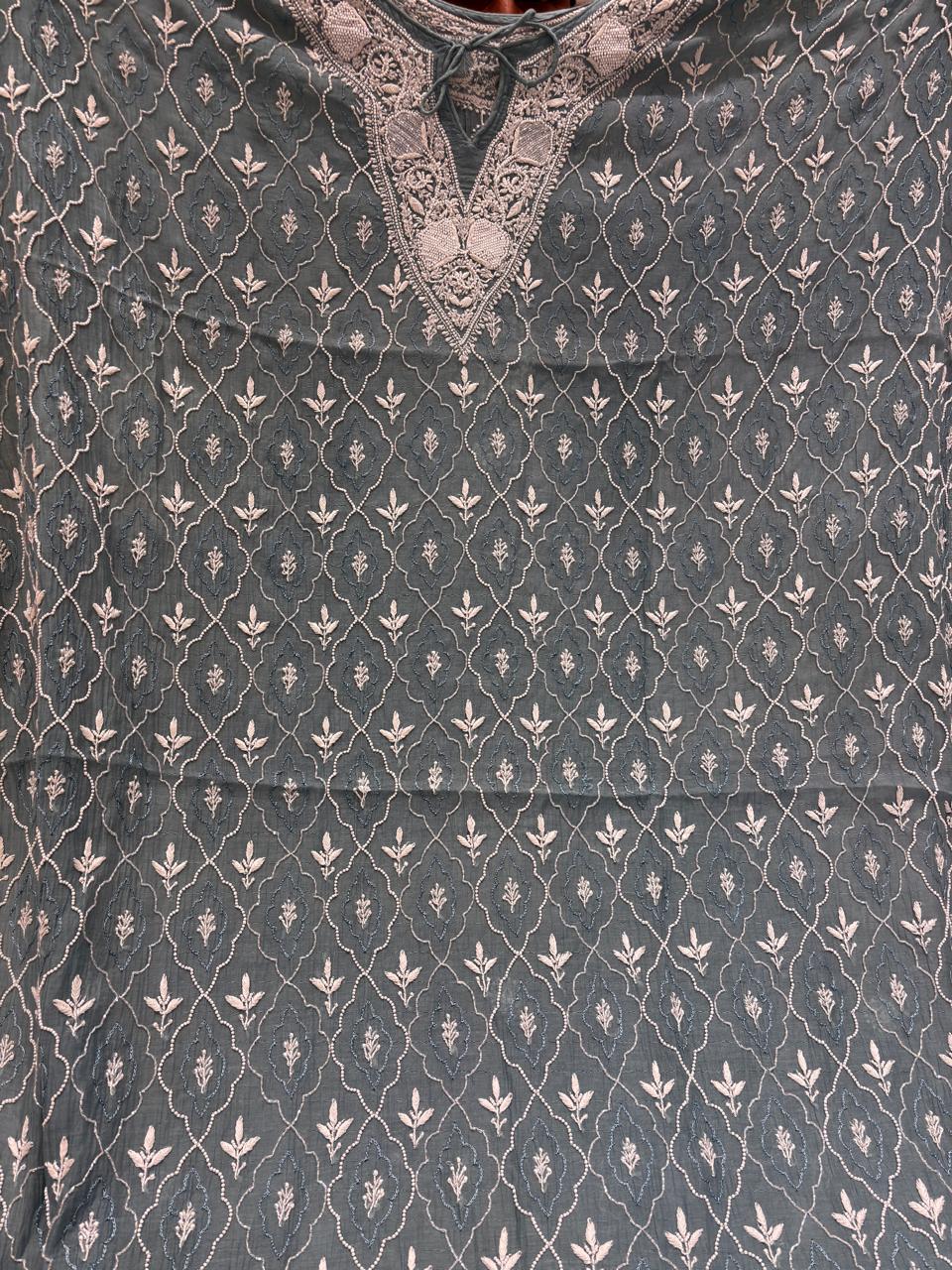
White-on-white Chikankari — known in its purest form as shadow work — is perhaps the most refined expression of Lucknow's embroidery tradition. When thread meets fabric of the same hue, the craft reveals itself only through texture and the play of light on raised stitches. There are no competing colours. No bold statements. Only the quiet confidence of extraordinary skill.
This restraint is what makes white Chikankari timeless. It does not demand attention. It whispers. And in that whisper lies a luxury that no amount of embellishment can replicate. To wear it is to carry something that rewards closeness — the kind of beauty discovered only when you slow down to look.
A Craft Rooted in Patience
The creation of a single Chikankari saree can take an artisan between three months and a year, depending on the density of the work. The most prized pieces feature jali work — an intricate lattice created by pulling apart individual threads of the fabric with a needle, rather than cutting them. The result is a delicate transparency that looks like lace but is achieved entirely by hand.
More than thirty distinct stitches exist within the Chikankari vocabulary. Each has a specific application: the flat bakhiya stitch for shadow work visible from the reverse, the raised phanda for three-dimensional dots, the delicate murri for tiny rice-grain knots. A skilled artisan might spend years mastering just a handful of these techniques.
“The finest Chikankari is not seen. It is felt — in the weight of the fabric, the texture under the fingertip, the way it drapes.”
Why It Endures
Fashion moves in cycles, but certain things remain outside of trend. Chikankari is one of them. It has been worn by Mughal emperors and contemporary designers alike. It appears on the shoulders of brides and on the pages of international fashion editorials. It is, in the truest sense, eternal.
The reason is simple: Chikankari is made by hand, with intention, one stitch at a time. It cannot be rushed or replicated at scale without losing the very quality that defines it. In a world of abundance, true scarcity lies not in price but in the patience required to create something like this.
At Naqsh, we honour this tradition in every piece we curate. We work directly with artisans in Lucknow — women and men who have inherited this craft from their mothers and grandmothers — to create pieces that carry the true imprint of handwork. Not as a revival. Not as a tribute. But as a living, breathing continuation of something worth preserving.